W e l c o m e t o X i ' a n V a d e r A v i a t i o n S i m u l a t o r C o . , L t d .
Loading
Xi'an Weide Aviation Simulation Equipment Co., Ltd. is a high-tech enterprise dedicated to the design, production, sales, and service of aviation simulation equipment.
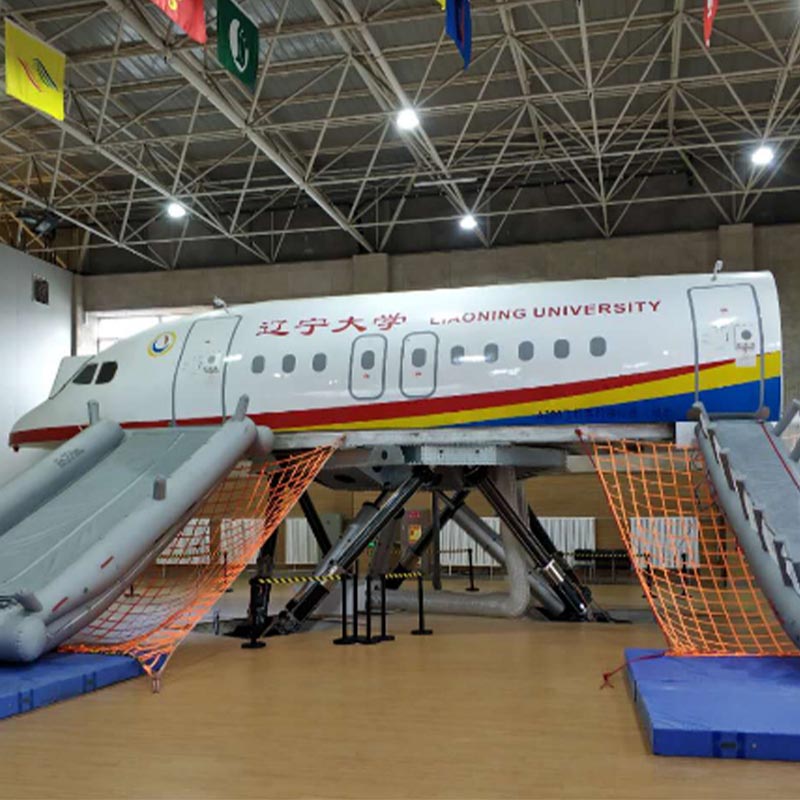
The cabin simulator (dynamic) for specific aircraft models can simulate aircraft taxiing, takeoff, cruise, turbulence, landing and various malfunctions. It is a special equipment for training flight attendants to correctly use onboard emergency equipment in emergency situations and to correctly and skillfully open various escape exits and guide passengers to evacuate the cabin quickly in accordance with the prescribed emergency evacuation procedures.
The simulator motion platform adopts an all-electric motion platform, which has low energy consumption, simple installation, and low maintenance rate. At the same time, it has more realistic dynamic simulation, which can simulate the impact motion, vibration and continuous acceleration of six degrees of freedom: rise and fall, forward and backward, left and right displacement, pitch, roll and yaw. It can simulate the acceleration, deceleration, roll, impact and turbulence felt by the aircraft during taxiing, takeoff, cruise and emergency landing.
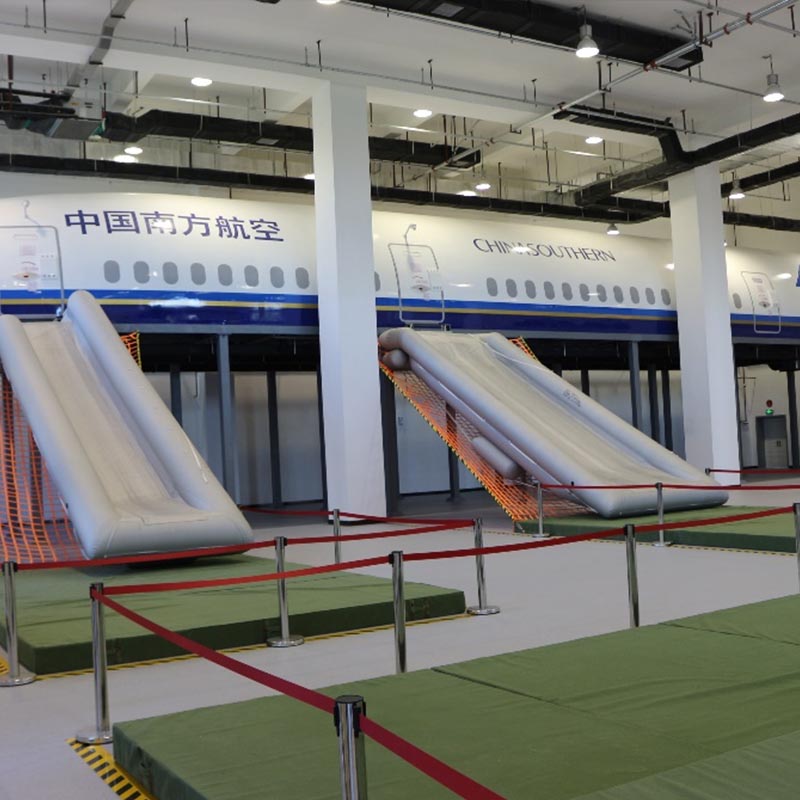
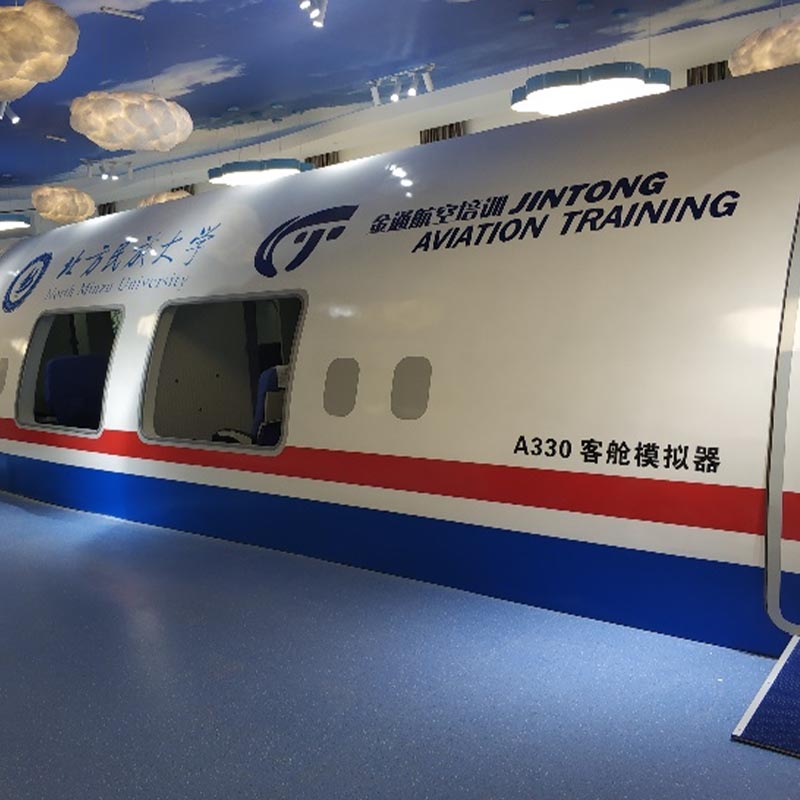
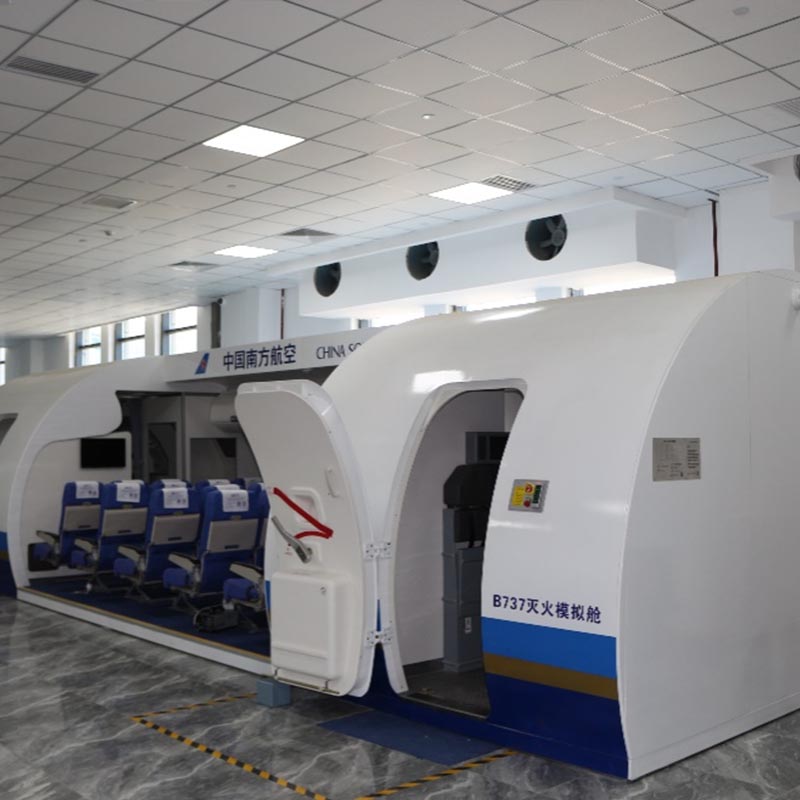
A specific aircraft cabin simulator (static) is a professional training device used to train flight attendants to perform cabin service correctly and to open all cabin doors and emergency doors of the aircraft in normal and emergency situations, and to guide passengers to evacuate the cabin quickly according to the prescribed emergency evacuation procedures.
The cabin simulator (static integrated cabin) for specific aircraft models is a full cabin structure, consisting of four parts in length: the cockpit section, the front door section, the cabin section, and the rear door section. It is a special device for training flight attendants to help passengers correctly use onboard emergency equipment and to open various escape exits of the aircraft and guide passengers to evacuate quickly from the cabin in the event of an emergency.
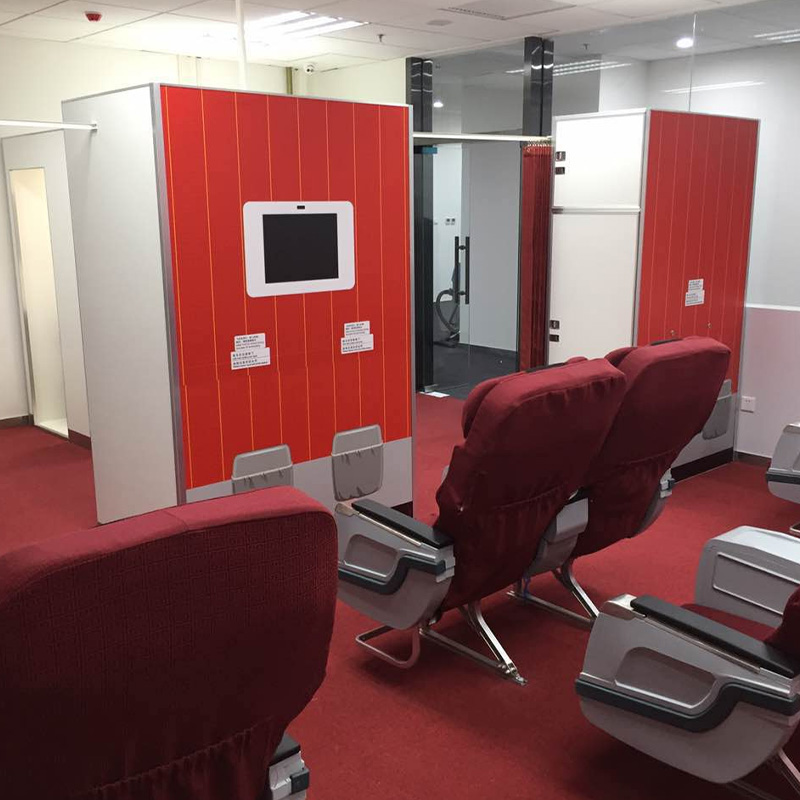
A simplified flight simulator cabin for a specific aircraft model simulates the fuselage above the floor line of the aircraft and realistically reflects the cabin layout of that aircraft model, including the galley, lavatory, and cloakroom. It is equipped with no fewer than 40 economy class passenger seats (the number of seat rows can be adjusted according to the size of the classroom) and corresponding aisles. It is a ground training device used to simulate aircraft flight attendants.
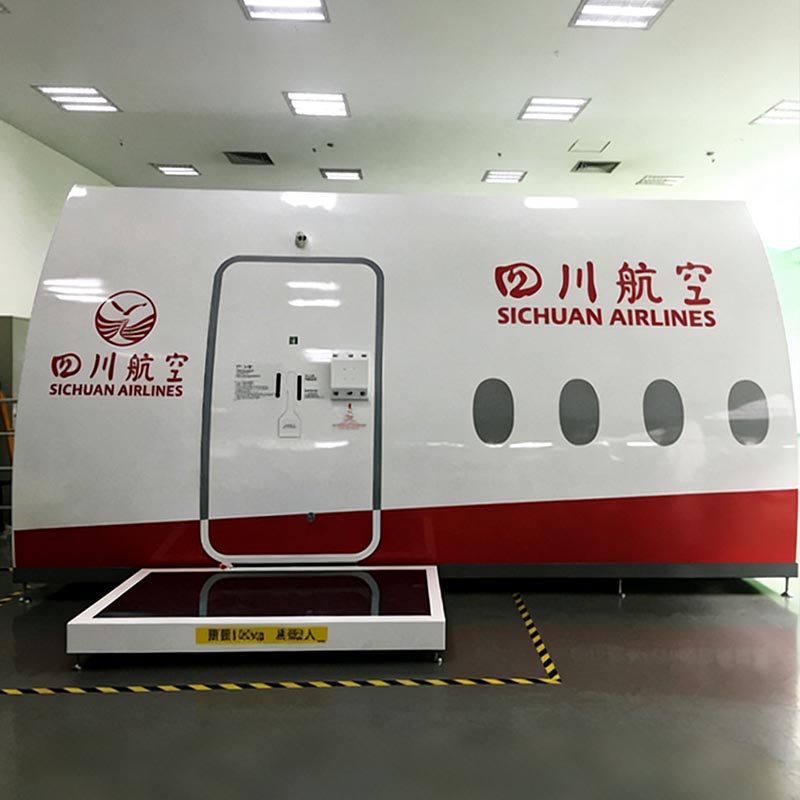
The specific aircraft exit simulator is a professional training device used by flight attendants to correctly and skillfully open the aircraft boarding door in both normal and emergency situations.
Fire extinguishing simulators for specific aircraft models are professional training devices used to train flight attendants to correctly use onboard fire extinguishing equipment and quickly extinguish real open flames in accordance with prescribed fire extinguishing procedures in the event of a fire on an aircraft.
1. Cabin simulator (dynamic and static)
2. Exit simulator (floor-level exits and off-floor exits)
3. Fire extinguishing simulator
4. Water training range
The dynamic function should be able to dynamically simulate the aircraft's attitude during takeoff, descent, turbulence, and emergency landing, with at least three degrees of freedom: vertical, roll, and pitch, and a vertical acceleration of at least 0.5G.
Around 15 million
All of the above are domestically produced.
6 months
Cockpit, functional doors, crew seats, passenger seats, galley, lavatory, luggage compartments, PSU, slides, lighting control, communication systems, emergency equipment, visual systems, audio systems, fire suppression systems, training systems, and monitoring systems.
It is a proportional replica of the cabin doors and emergency exits of a specific aircraft model. Its appearance, structure, dimensions, and operation should be consistent with the simulated aircraft model, including the necessary equipment and support procedures for the cabin doors and emergency exits, as well as the viewing system of the cabin door observation windows. The surrounding environment of the exits (such as signs, auxiliary handles, warning tapes, directional signs, evacuation direction arrows, etc.) should be consistent with the simulated aircraft model.
The fire simulator should be able to simulate the appearance of a real fire source.
It should have a certain temperature (40℃-45℃ recommended).
It should be able to simulate the smoke emitted by a real fire source.
It should use fire extinguishing equipment consistent with the aircraft model being simulated, extinguishing the fire through high-pressure air blowing or electronic induction.
The real or simulated fire source and the fire simulator must be in the same space.
It should include equipment such as a galley, lavatory, passenger seating facilities, and non-functional passenger service components found in the cabin unit of the aircraft model being simulated.
The water area must be at least 15 x 15 meters in size and at least 1.5 meters deep.
(Inclusive) Water temperature not lower than 26℃. Water quality meets national health standards. Amenities include changing rooms and temperature-adjustable showers. Equipment and facilities for other purposes cannot be installed simultaneously.
Equipped with at least 5 rows of passenger seats and corresponding aisles, as well as emergency equipment storage areas. Crew members can access the water training area via cabin simulator or exit simulator and undergo training required for water landings and watercraft/life raft operations.
Contact Us
Sign Up and Never Miss a Deal Again
Xi'an Weide Aviation Simulation Equipment Co., Ltd. is a high-tech enterprise dedicated to the design, production, sales, and service of aviation simulation equipment. Its main products are various simulation equipment for cabin crew, air security, and aircraft maintenance.